Augustus
The First Roman Emperor
From the ashes of the Republic, Augustus built an empire that would last for centuries.
Born Gaius Octavius in 63 BCE, Augustus was the adopted son of Julius Caesar and the architect of the Roman Empire. After a decade of civil war, he emerged as the sole ruler of Rome, transforming a fractured republic into a stable autocracy that endured for more than 400 years.
Life and Reign of Augustus
- Birth of Gaius Octavius
Born in Rome, in a modest equestrian family.
- Adopted by Julius Caesar
After Caesar's assassination, Octavian inherits his name and political ambitions.
- Battle of Actium
Decisively defeats the combined forces of Mark Antony and Cleopatra, becoming the unrivaled master of the Roman world.
- The Rise of Augustus
The Senate grants him the title 'Augustus' (revered one), marking the beginning of the Principate and the Roman Empire.
- Death of Augustus
Dies in Nola after more than 40 years of rule; succeeded by his stepson Tiberius.
The Principate: Augustus's Political Structure
The title preferred by Augustus, meaning 'First Citizen'. It masked his absolute rule by maintaining the facade of a restored Republic.
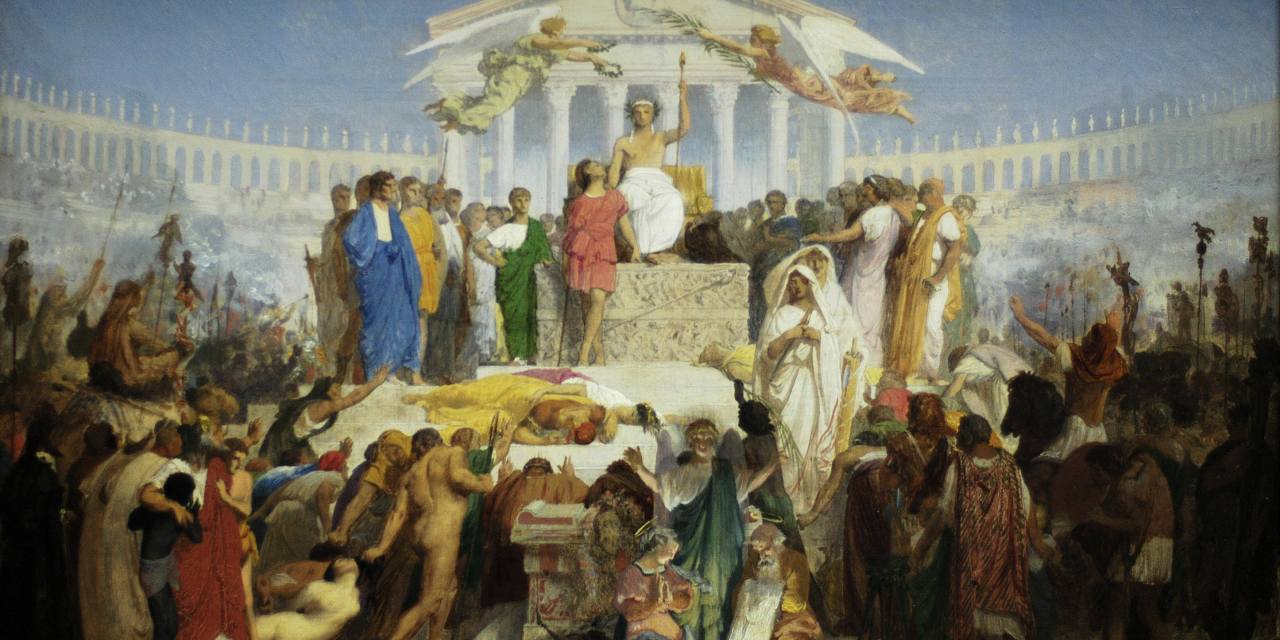
The Ara Pacis Augustae, a monumental altar celebrating the return of peace under Augustus.
Augustus was not merely a conqueror but a visionary statesman. He reorganized the Roman army, creating a standing professional military, and established the Praetorian Guard. His reforms extended to the administration of provinces, taxation, and infrastructure, creating the famous Pax Romana — a period of relative peace and prosperity across the Mediterranean world.
The Augustan Age and Cultural Legacy
Augustus ushered in a golden age of Roman literature and art. Patronage from him and his friend Maecenas supported writers like Virgil, Horace, and Livy, whose works celebrated Rome’s history and imperial destiny. His construction projects were massive, leading him to famously declare: 'I found Rome a city of brick and left it a city of marble.' His stable rule set the blueprint for the Roman Empire for centuries to come.
Interesting Facts about Augustus
- Augustus never called himself 'emperor'; he preferred the title 'Princeps', meaning 'First Citizen'.
- He established the Praetorian Guard, an elite force that later influenced imperial politics.
- The month of August is named after him.
- He commissioned great building projects, boasting that he 'found Rome a city of brick and left it a city of marble'.
- He was deeply superstitious and believed in omens and divine favor.